
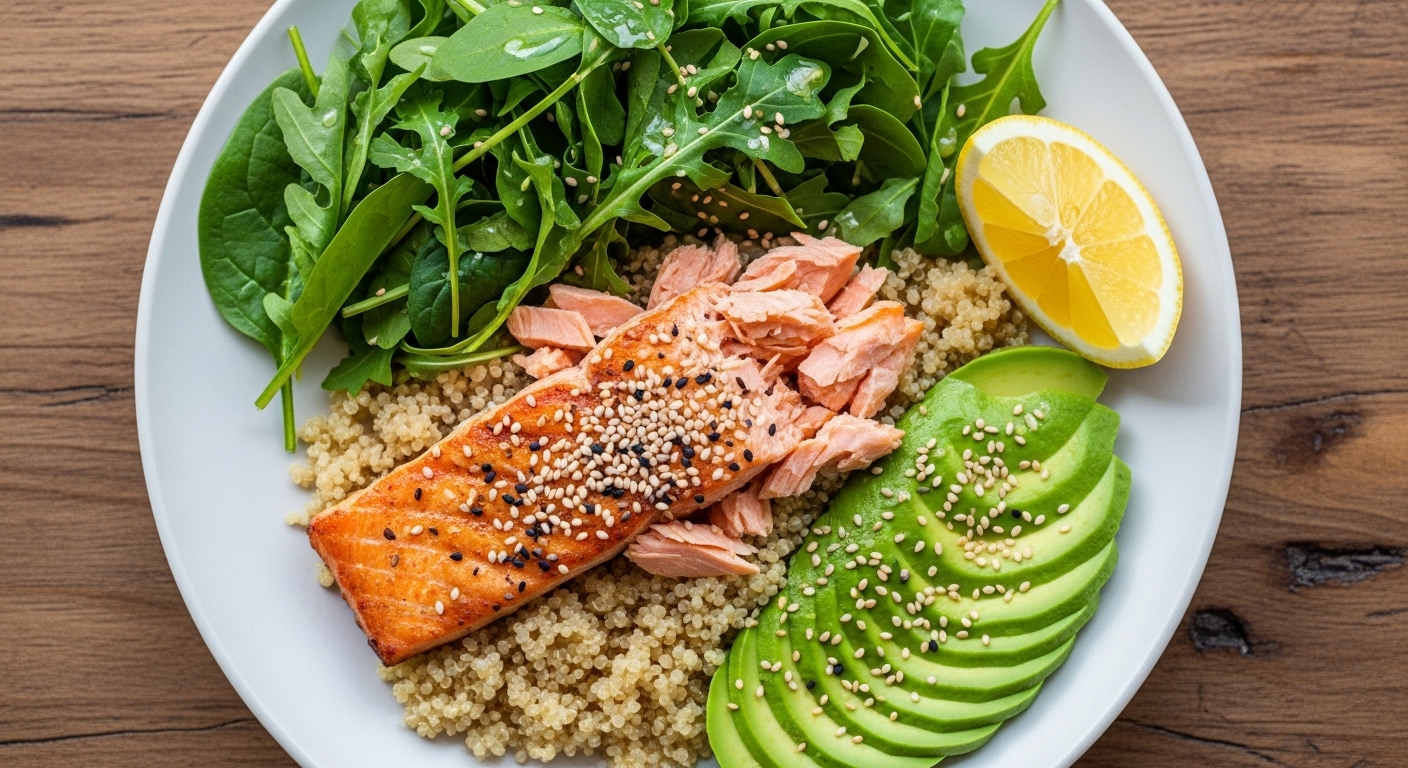
Feeling tired or foggy? You might need more iron. Learn how this vital mineral supports your energy, focus, and skin—and how to get it naturally.
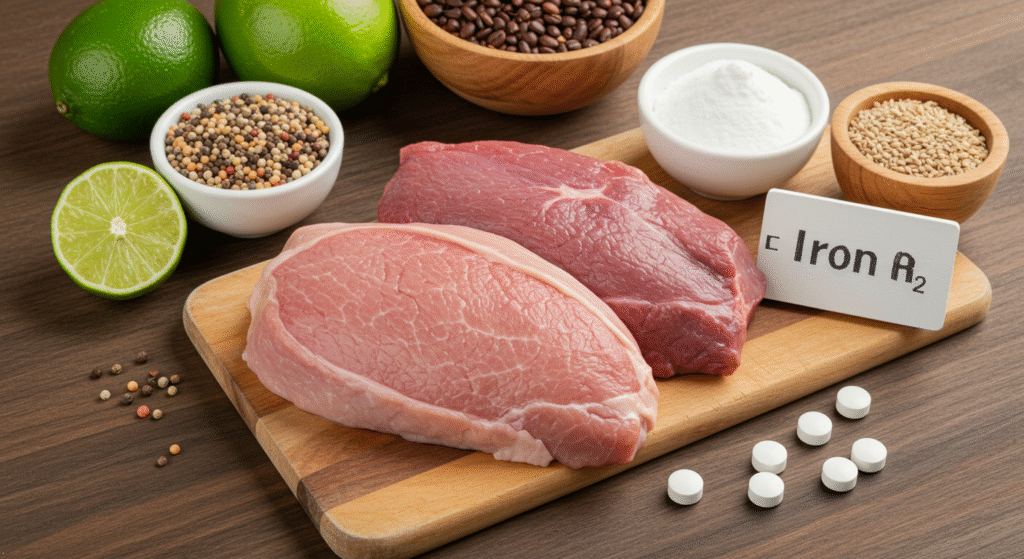
Iron: The Often-Overlooked Nutrient You Can’t Thrive Without
Iron may not be the trendiest nutrient, but it’s one your body literally can’t live without. It’s essential for transporting oxygen in your blood, supporting energy levels, and keeping your skin healthy and radiant.
Yet according to the World Health Organization, iron deficiency is one of the most common nutrient deficiencies globally—especially in women, children, and plant-based eaters.
So how can you tell if you’re getting enough—and what can you eat to make sure you are?
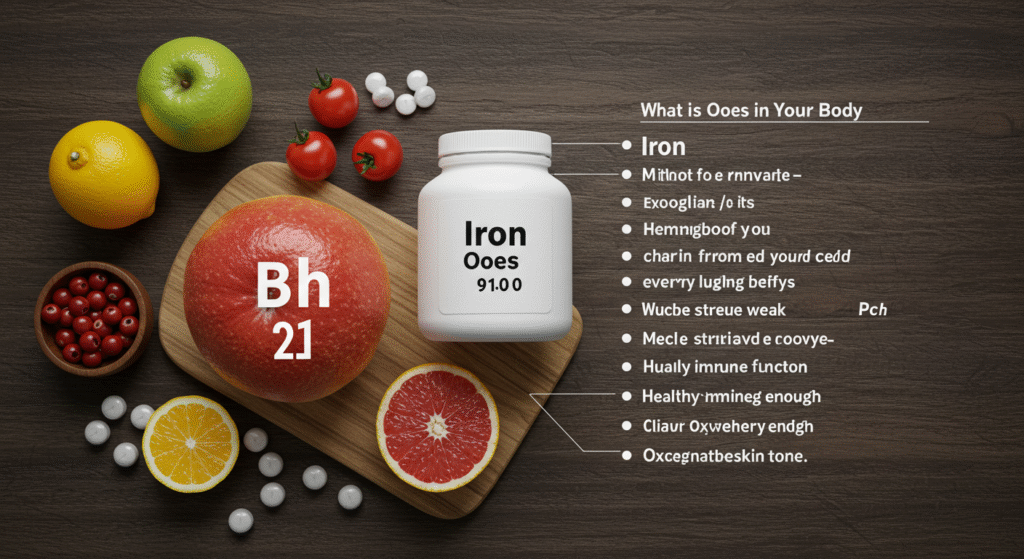
What Iron Does in Your Body
Iron is a key part of hemoglobin, a protein in your red blood cells that carries oxygen from your lungs to every part of your body. Without enough of it, you can feel tired, cold, weak, and foggy—even if you’re eating well and sleeping enough.
Iron also supports:
- Mental focus and cognitive performance
- Muscle strength and recovery
- Healthy immune function
- Clear, oxygenated skin tone
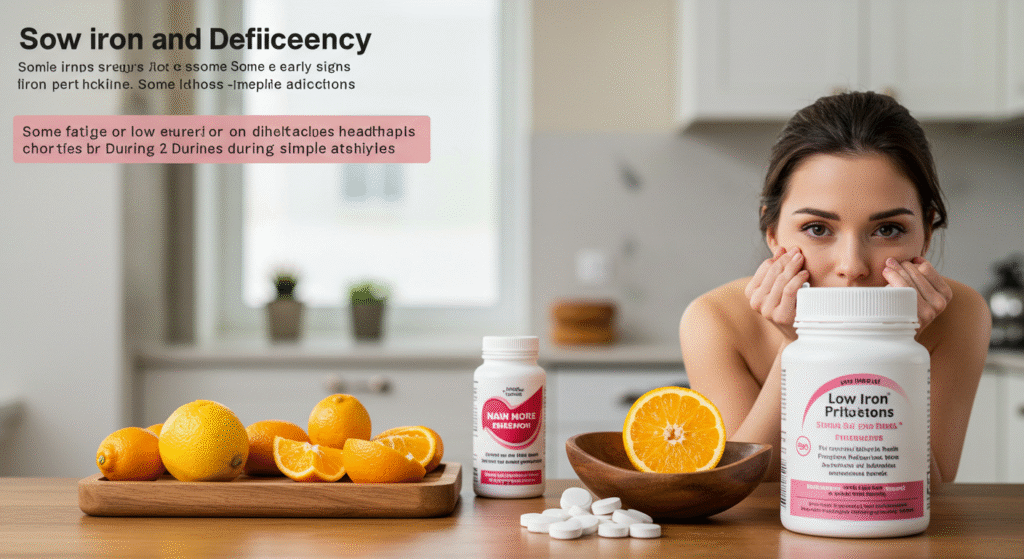
Signs of Iron Deficiency
Low iron can sneak up on you. Some early signs include:
- Constant fatigue or low energy
- Pale or dull skin
- Frequent headaches or brain fog
- Brittle nails or hair thinning
- Shortness of breath during simple activities
If these sound familiar, ask your doctor about checking your ferritin and iron levels.
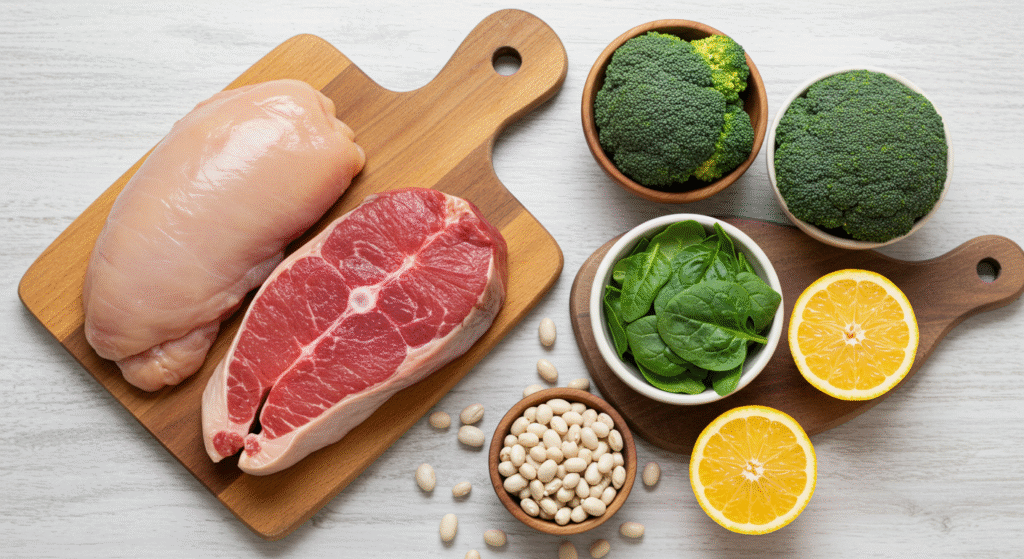
Heme vs Non-Heme Iron: What’s the Difference?
- Heme iron comes from animal sources like red meat and poultry and is absorbed more efficiently.
- Non-heme iron is found in plant-based foods like beans and leafy greens but needs a little help to be absorbed.
✅ Boost absorption by pairing non-heme iron with vitamin C-rich foods (like citrus or bell peppers).
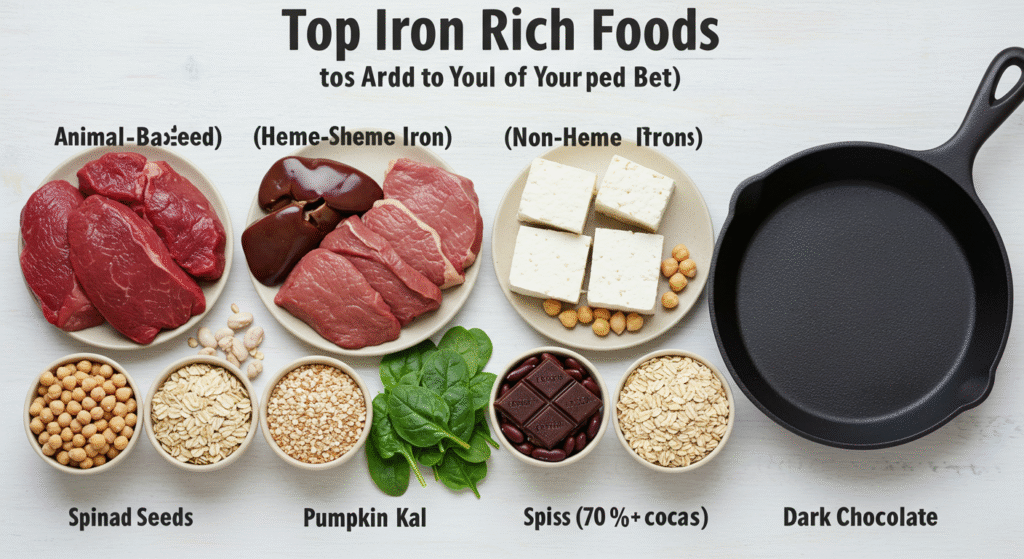
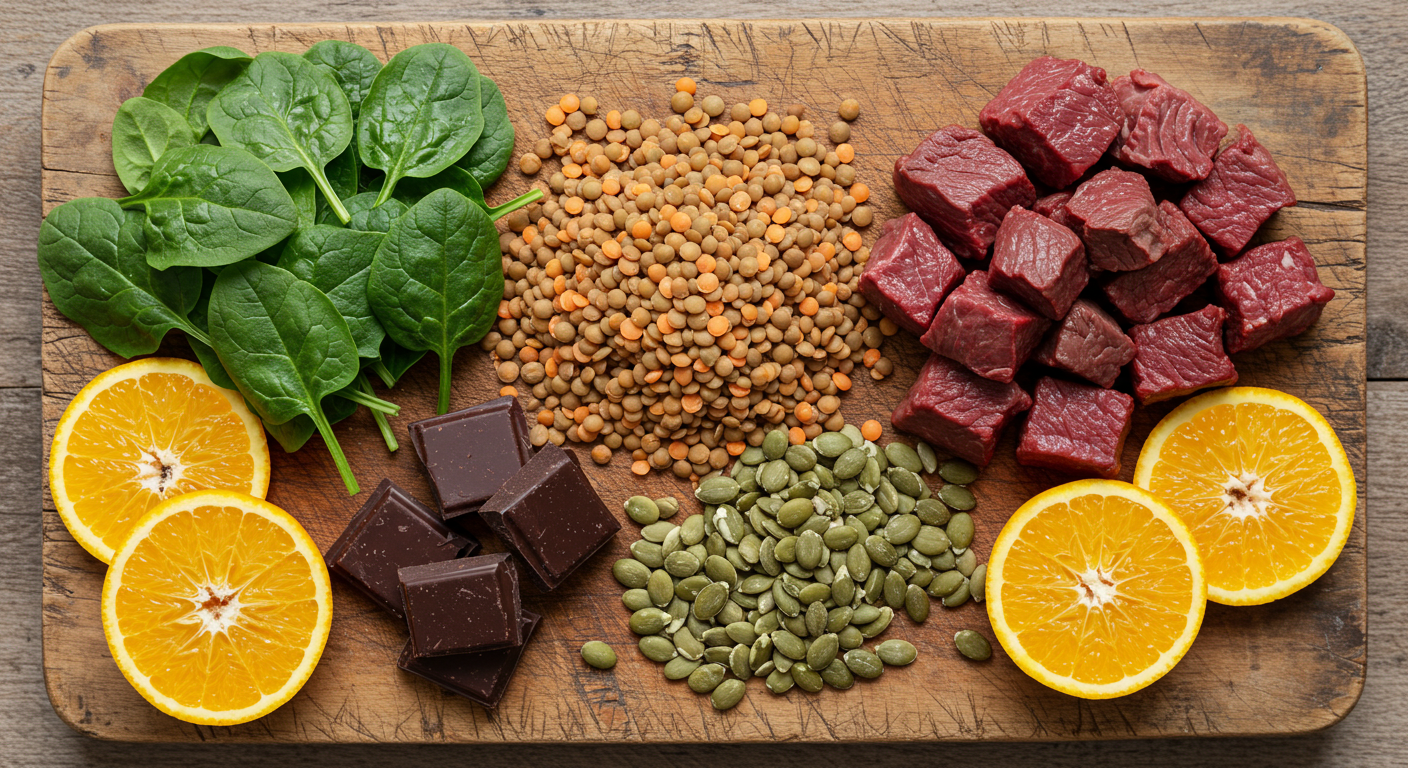
Top Iron-Rich Foods to Add to Your Diet
Whether you eat meat or not, here are the best food sources of iron:
Animal-Based (Heme Iron):
- Beef, lamb, and liver
- Chicken thighs and turkey
- Canned sardines or tuna
Plant-Based (Non-Heme Iron):
- Lentils, chickpeas, and kidney beans
- Tofu and tempeh
- Spinach, kale, and Swiss chard
- Pumpkin seeds, quinoa, and oats
- Dark chocolate (70%+ cocoa)
Pro tip: Cook in a cast iron pan—it can increase the iron content of your meals naturally.
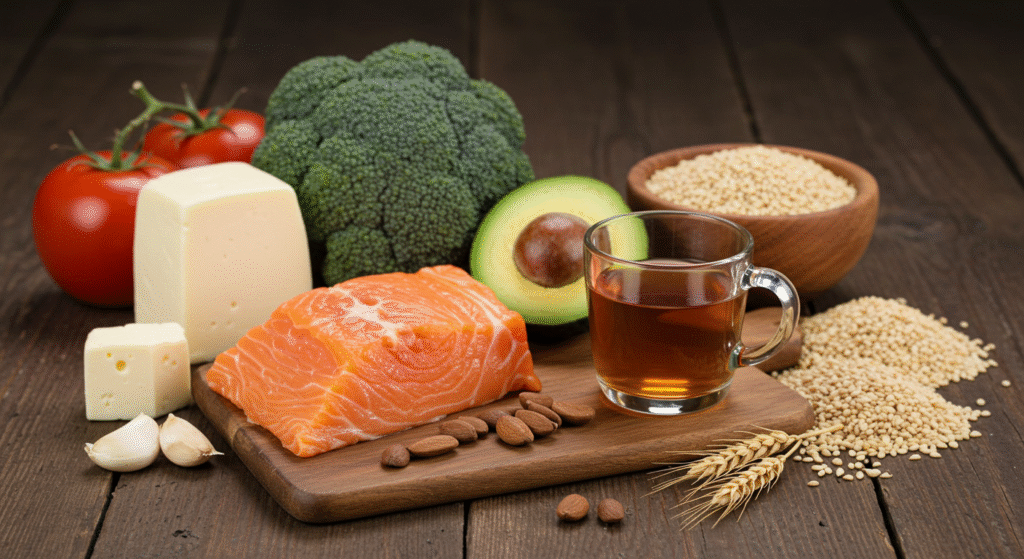
Foods That Can Block Iron Absorption
Certain compounds can reduce how well your body absorbs iron:
- Calcium-rich foods (like dairy) taken with iron
- Tannins in tea and coffee
- Phytates in some whole grains (soaking or sprouting helps reduce them)
Avoid taking iron-rich meals alongside heavy calcium supplements or black tea.
Final Thoughts
Iron plays a quiet but powerful role in your daily energy, mood, and skin glow. By making smart food choices—and combining them wisely—you can prevent deficiency and give your body the fuel it needs to thrive.
If you suspect low iron, don’t guess—test. Then nourish yourself with iron-rich foods every day for lasting strength, focus, and radiance.